- UK limited company public information
- Checking a UK VAT number
- FSCS (Financial Services Compensation Scheme)
- ICO (Information Commissioner’s Office)
- UK foreign travel advice
UK limited company public information
Before starting any negotiation with a new UK business partner, it is always wise to do some background checks on the company. Companies House makes that easy.
Companies House is an executive agency sponsored by the Department for Business and Trade (DBT). It incorporates and dissolves limited companies, registers their information and makes it available to the public.
Link: gov.uk/get-information-about-a-company
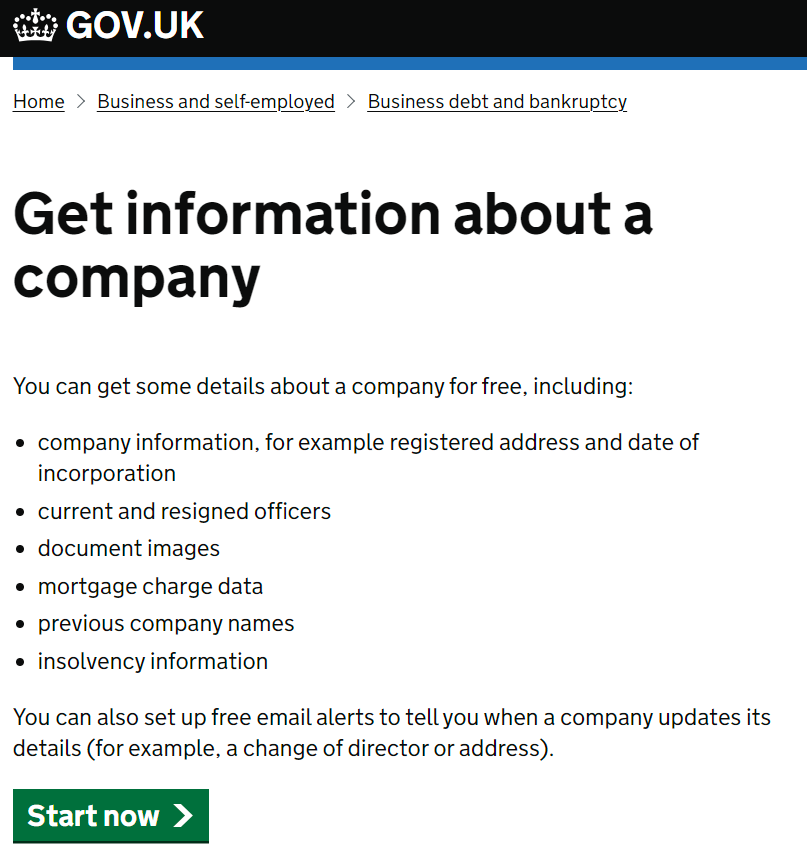
Get information about a company
You can get details about a company for free, including:
- company information, for example the registered address and date of incorporation
- current and resigned officers
- document images
- mortgage charge data
- previous company names
- insolvency information
Open the link above and select the green Start now button.
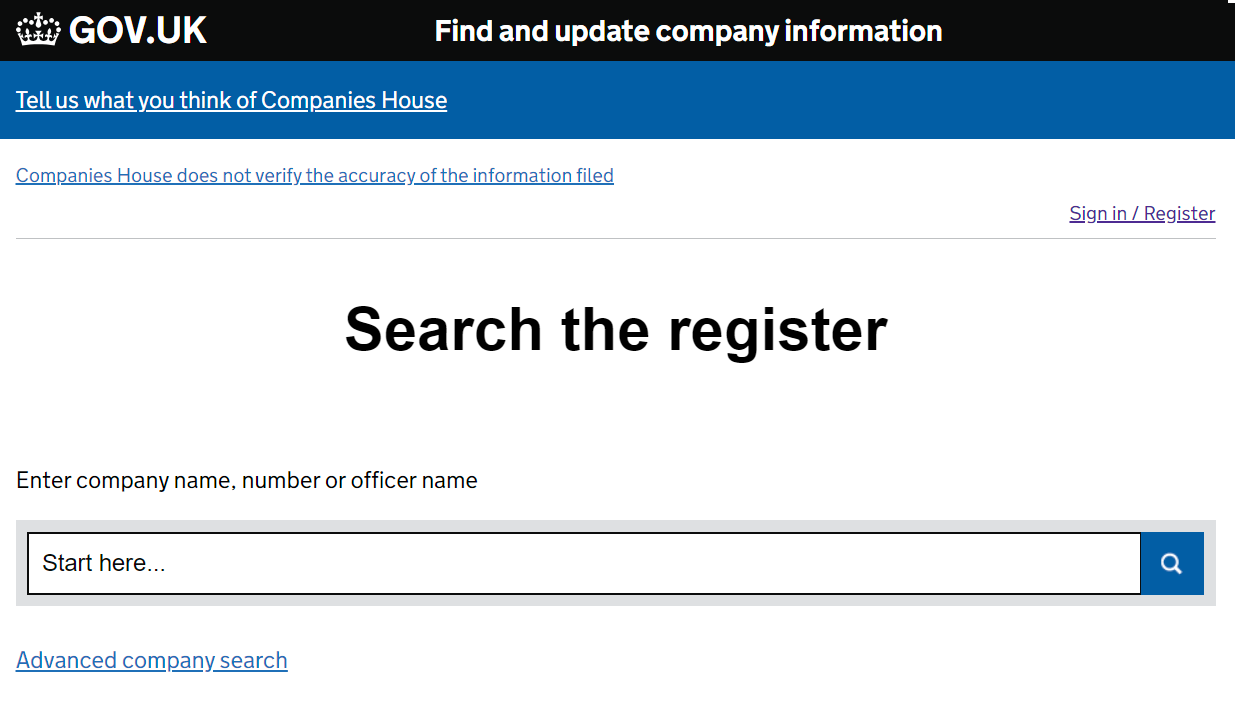
Search the register
You can find a company by:
- company name
- company number
- officer name
Link: find-and-update.company-information.service.gov.uk
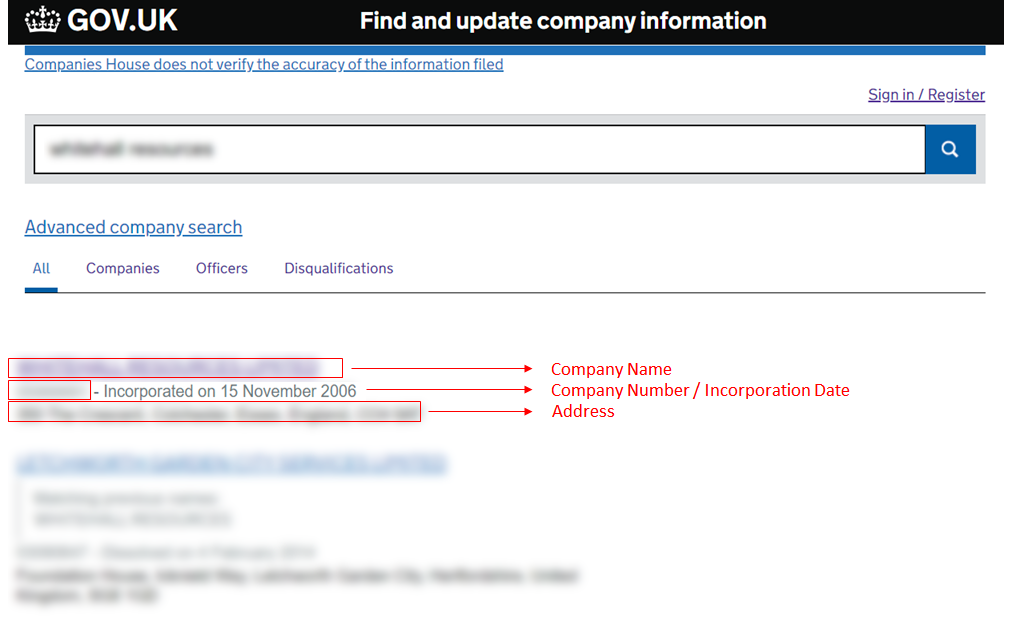
The service also lets you:
- file abridged or full accounts
- change a registered office address
- view company data and document images
- search for disqualified directors
- order certificates and certified documents
- follow companies
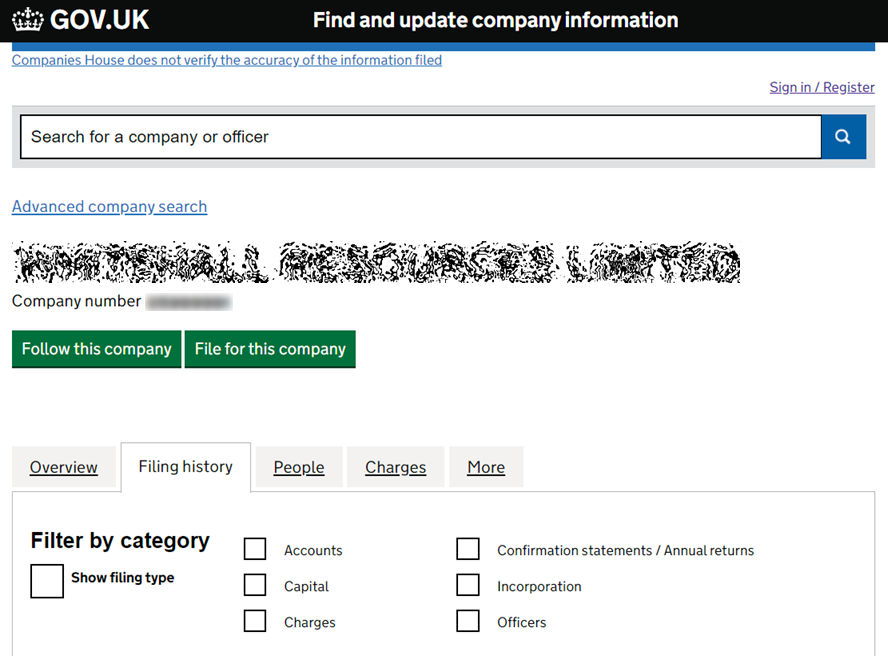
Information available
- Overview
- Filing history
- People (e.g. directors and secretary)
- Charges
- More
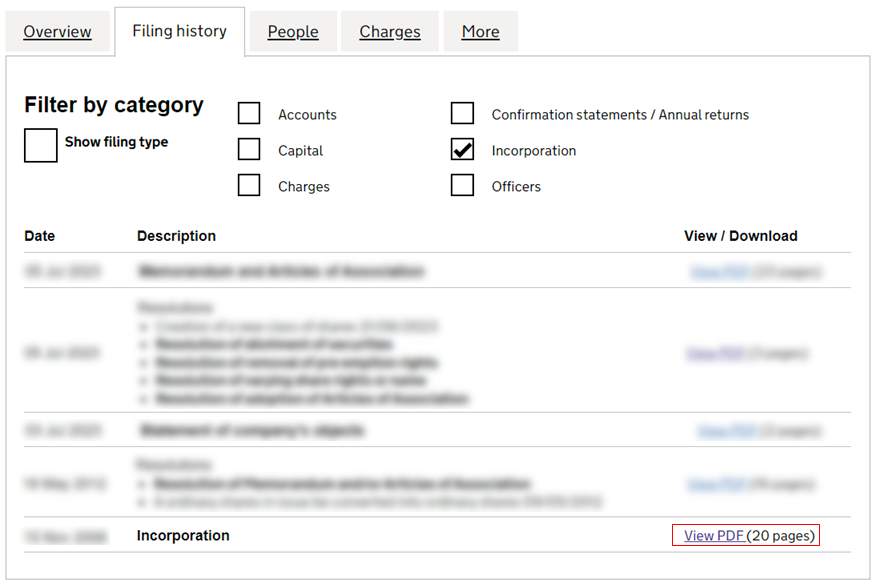
The filing history can be filtered by category:
- Accounts
- Capital
- Charges
- Confirmation statements / annual returns
- Incorporation
- Officers
Incorporation
Filter the filing history by incorporation to see all the incorporation documents, such as the share capital.
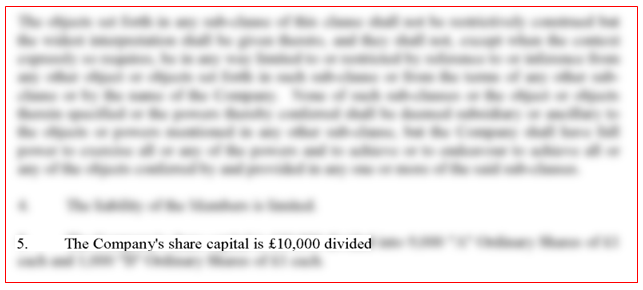
Share capital
In this example, the company was incorporated with a share capital of £10,000.
Accounts
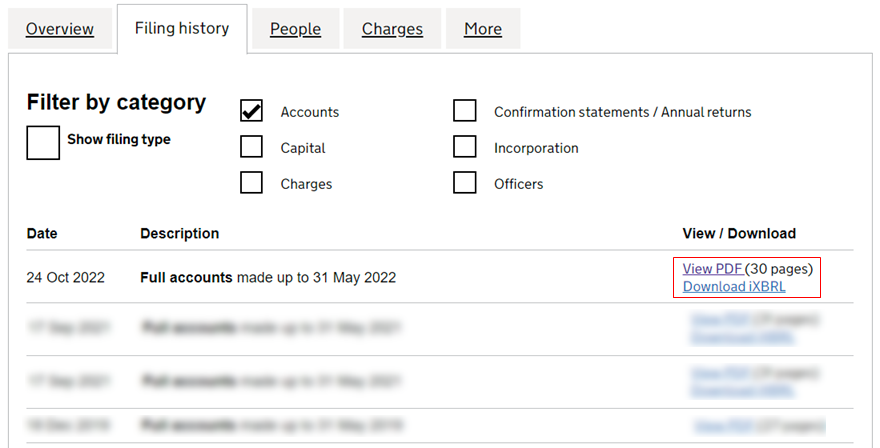
Filter the filing history by accounts to see all the accounts the company has filed, such as:
- balance sheet
- profit and loss
- cash flow
- and much more
Balance sheet
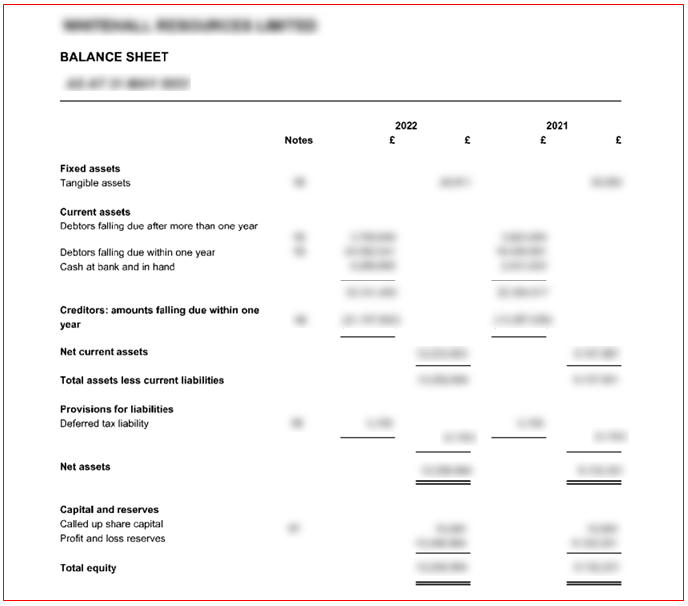
An example of a filed balance sheet, showing:
- Fixed assets
- Tangible assets
- Current assets
- Debtors due after more than one year
- Debtors due within one year
- Cash at bank and in hand
- Creditors: amounts falling due within one year
- Net current assets
- Total assets less current liabilities
- Provisions for liabilities
- Deferred tax liability
- Net assets
- Capital and reserves
- Called-up share capital
- Profit and loss reserves
- Total equity
Other useful tools
- Company name availability: company-name-availability
- Alphabetical company search: alphabetical-search
- Dissolved company search: dissolved-search
Bankruptcy, insolvency and disqualified company directors
- Search the bankruptcy and insolvency register: gov.uk/search-bankruptcy-insolvency-register
- Search for disqualified company directors: gov.uk/search-the-register-of-disqualified-company-directors
Checking a UK VAT number
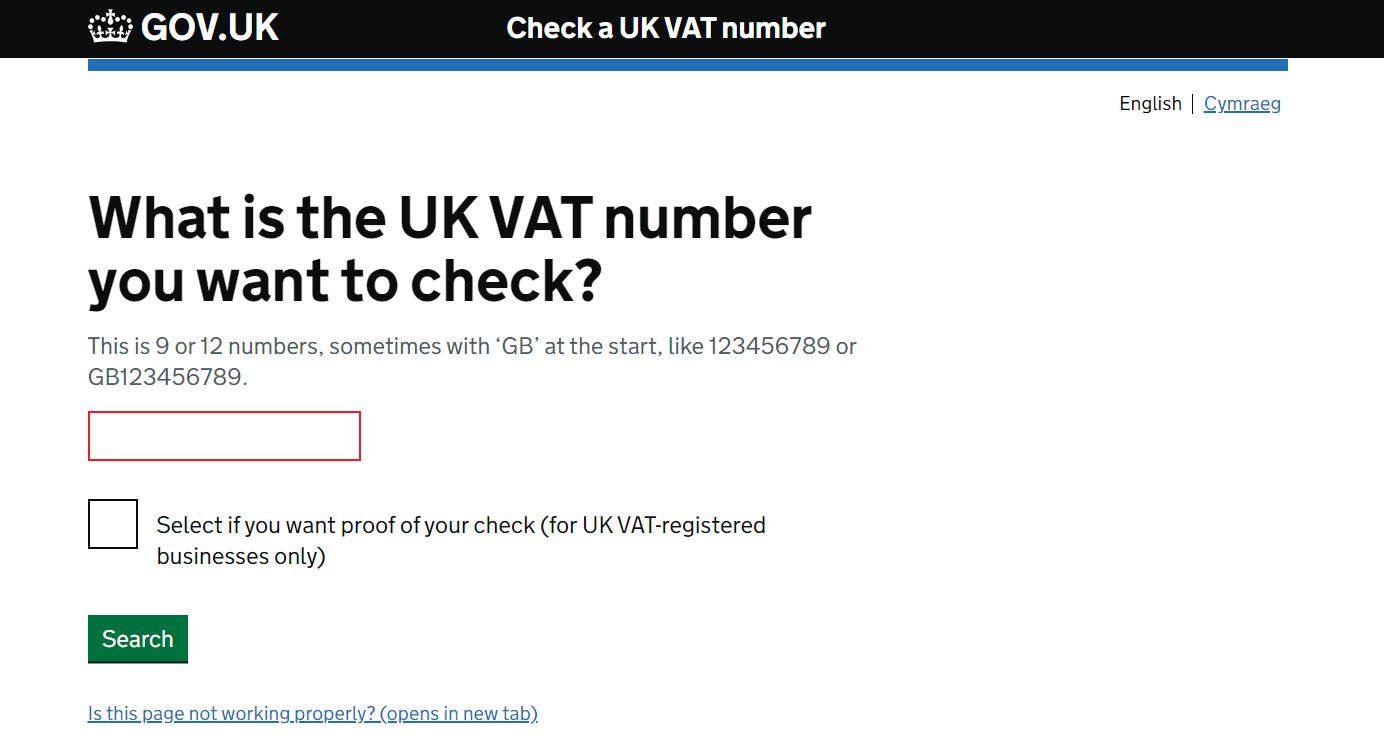
You can also check the UK VAT numbers given by your suppliers and customers.
Link: gov.uk/check-uk-vat-number
VAT number
Enter the VAT number and select Search. A UK VAT number has 9 digits (12 for some registrations), sometimes with “GB” at the start.
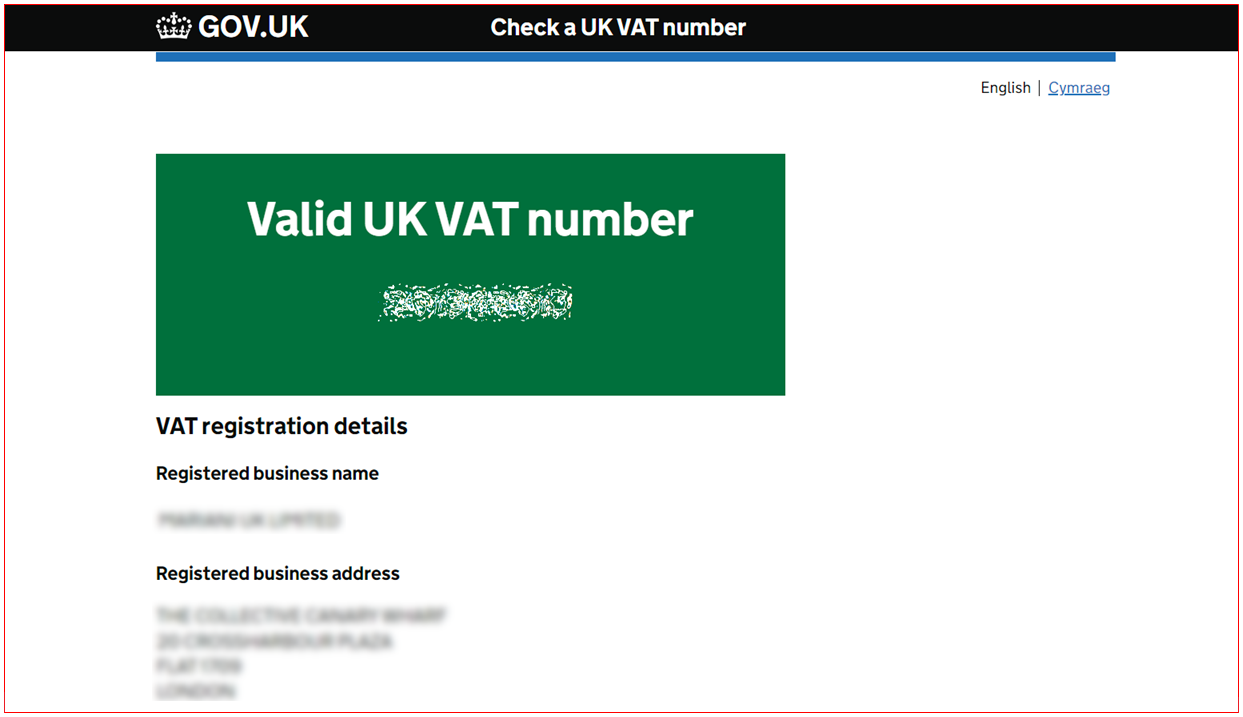
Valid UK VAT number
For a valid number, you see the registered business name and address.
FSCS (Financial Services Compensation Scheme)
The FSCS is the UK’s statutory compensation scheme for customers of authorized financial services firms: it can step in and pay compensation if a firm is unable, or likely to be unable, to pay claims against it.
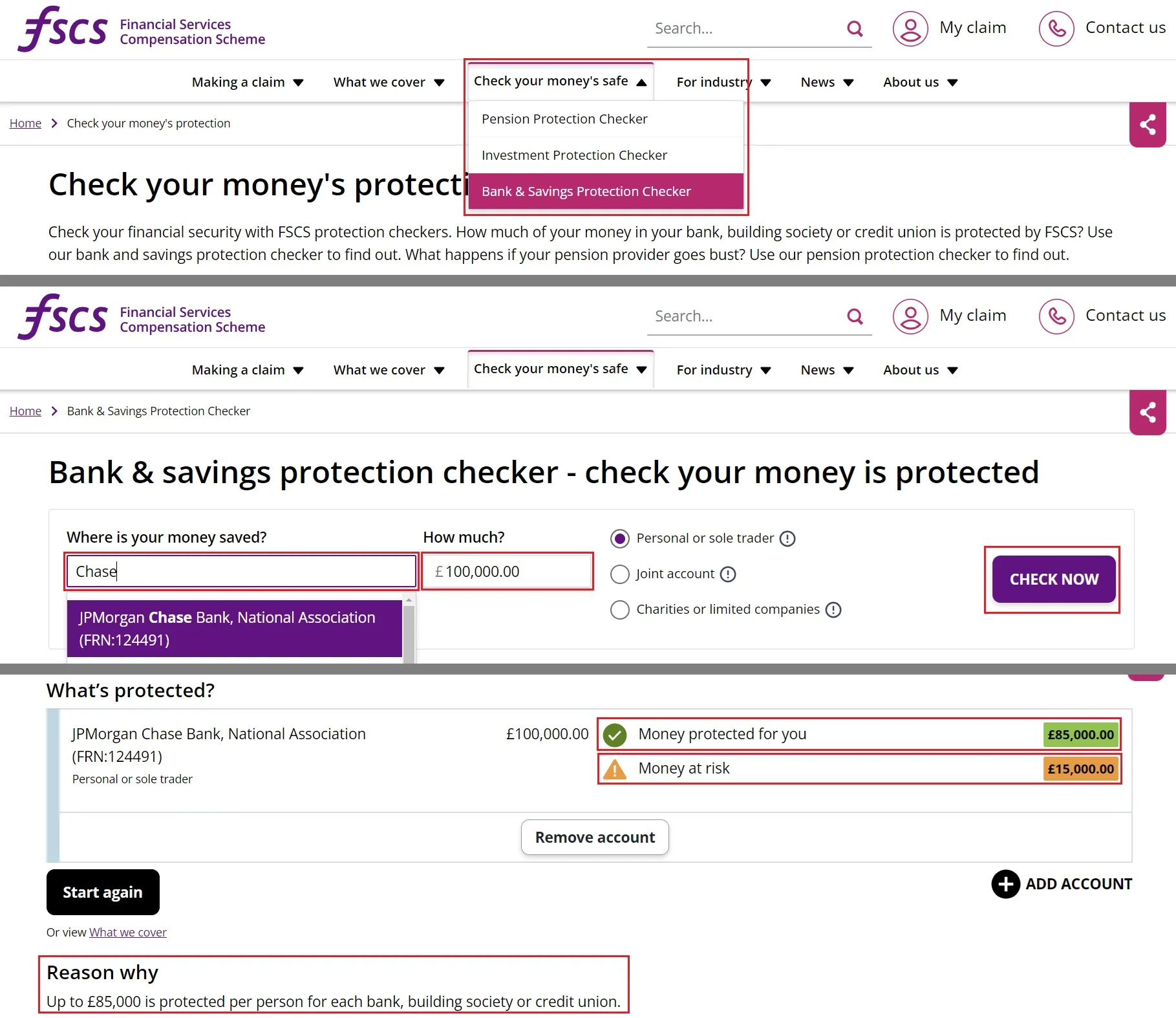
Before you invest or deposit money with an institution, use the FSCS checker to see whether the institution is authorized and covered by the FSCS.
Link: fscs.org.uk/check
Step by step
- Open the FSCS checker page.
- Choose what you want to check (in the example below, banks).
- Enter the name of the institution and select the right one.
- Enter the amount you plan to deposit (£100,000 in the example).
- Select Check now.
The FSCS then shows how much of your money is protected, up to the limit for that type of institution, how much is at risk, and why.
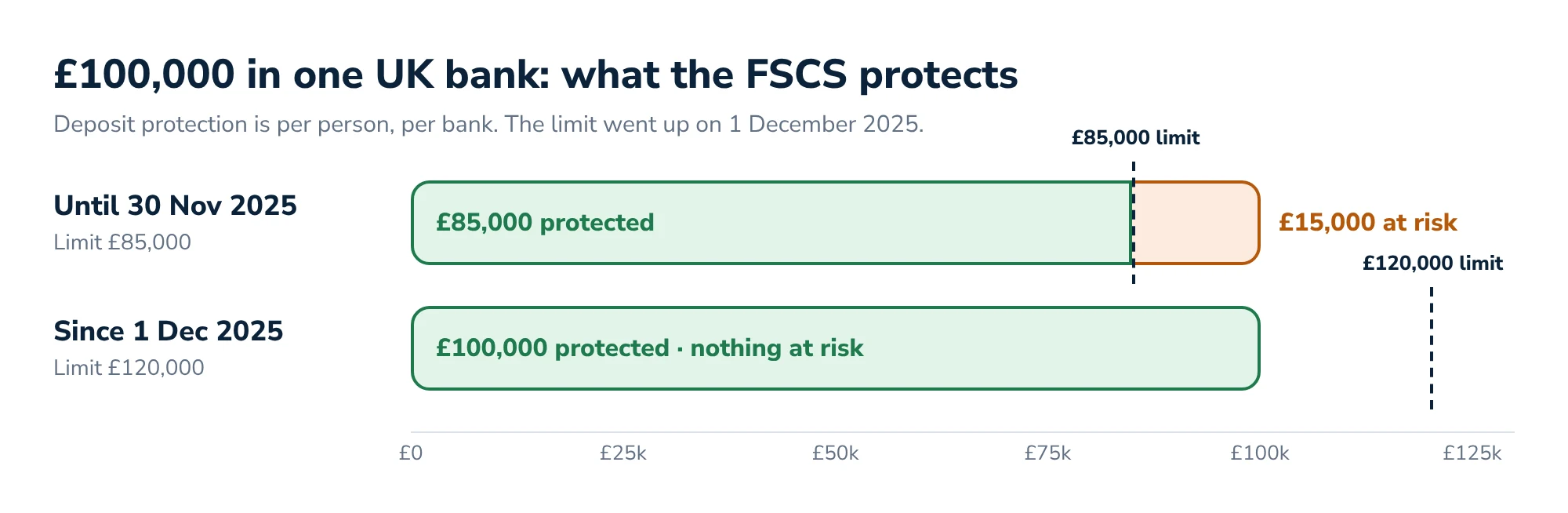
Note: Since 1 December 2025, the FSCS protects deposits up to £120,000 per person, per bank (until 30 November 2025 the limit was £85,000). The £100,000 in the example above is now fully protected.
ICO (Information Commissioner’s Office)
The ICO is the UK’s independent regulator for data protection and information rights. Since 30 September 2026, its legal form is the Information Commission, a body led by a board, but it is still known as the ICO.
The ICO data protection fee is mandatory for most businesses, organizations and sole traders that process personal data:
- Who must pay: businesses, organizations and sole traders that process personal data electronically
- When: every year, unless you are exempt
- What the fee pays for: the ICO’s work
- What it shows: that you take data protection seriously and value your customers’ information
- How much: it depends on the size of the organization. Most pay £52 (micro organizations) or £78 (small and medium organizations) per year; large organizations pay £3,763. Paying by direct debit takes £5 off.
- If you don’t pay: if you have to pay and don’t, you can be fined up to £4,350
Purpose
The ICO’s mission is to uphold information rights for the public in the digital age. It does this by:
- teaching organizations how to use personal data
- taking action against organizations that don’t comply with the law
- helping people understand and exercise their rights
- working with other regulators to improve information rights standards
Services
The ICO offers guidance and resources for organizations, including:
- public bodies
- private and third-sector organizations
- sole traders
For the public
The ICO provides information about data protection and information rights, including:
- how to make a subject access request (SAR): the right to ask for a copy of your personal data, and to understand how and why it is being used
- how to make a freedom of information (FOI) request: the Freedom of Information Act gives the public the right to ask public authorities for recorded information
- domestic CCTV and data protection
- protecting yourself against nuisance marketing
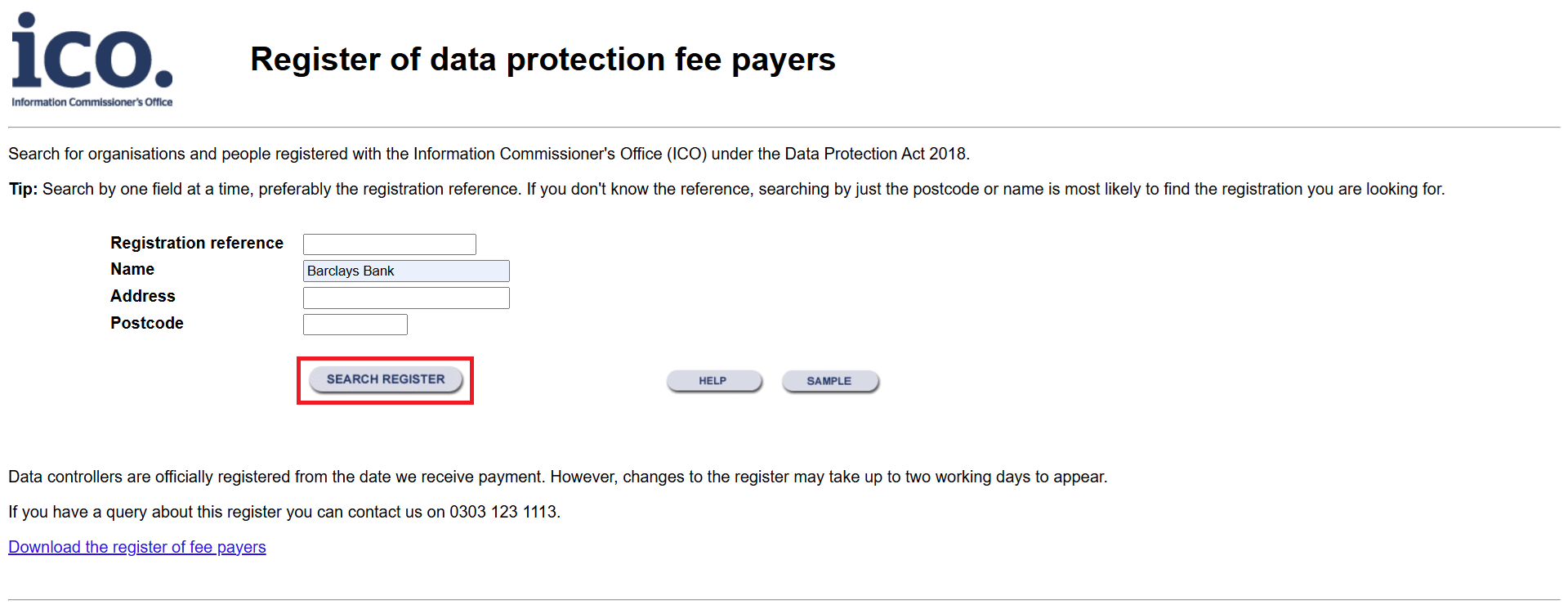
Register of data protection fee payers
Link: ico.org.uk/ESDWebPages/Search
You can search by:
- registration reference
- name
- address
- postcode
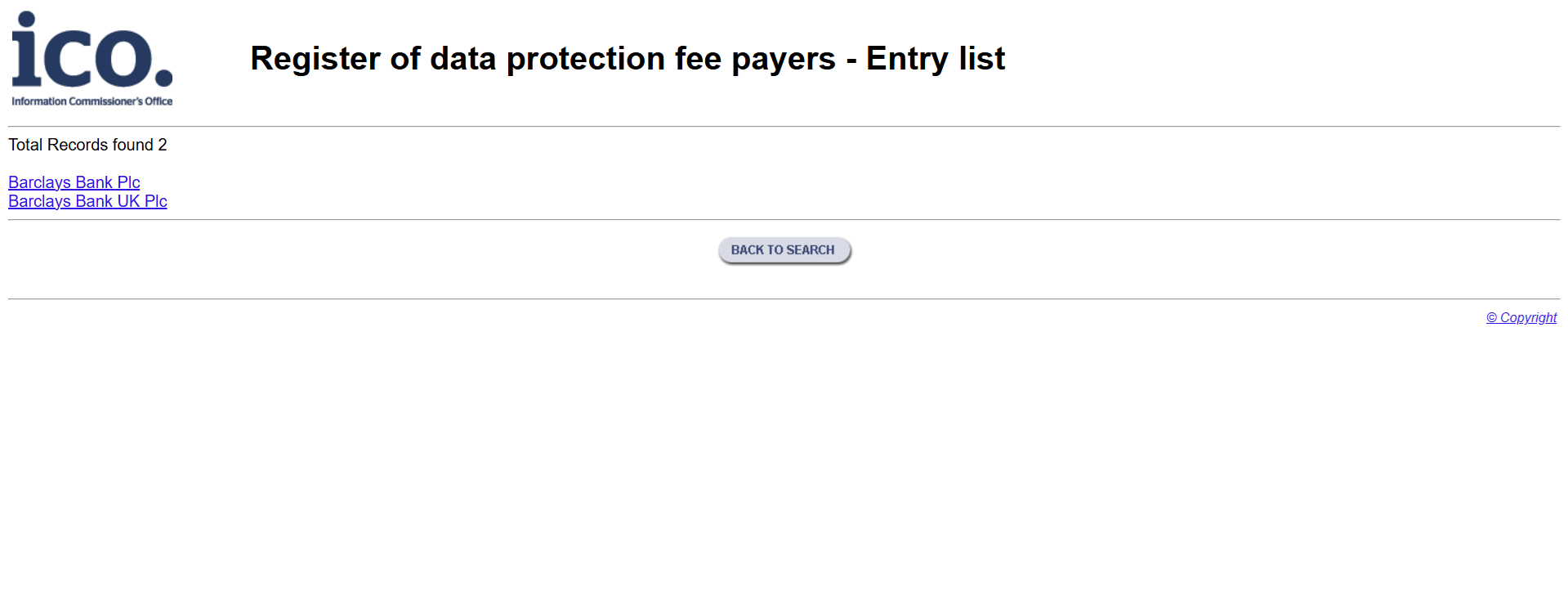
The result shows whether the organization pays the ICO fee.
UK foreign travel advice
The UK government’s Foreign, Commonwealth & Development Office (FCDO) publishes advice about travelling abroad for every country: safety and security, entry requirements and travel warnings.
Link: gov.uk/foreign-travel-advice
Each country’s page has the same sections:
- Warnings and insurance
- Entry requirements
- Safety and security (important: check it before travelling), with topics such as terrorism, political situation, crime, laws and cultural differences, outdoor activities, transport risks, and extreme weather and natural disasters
- Health
- Getting help
Hint: You can get email alerts whenever the advice for a country changes: gov.uk/foreign-travel-advice/email-signup.